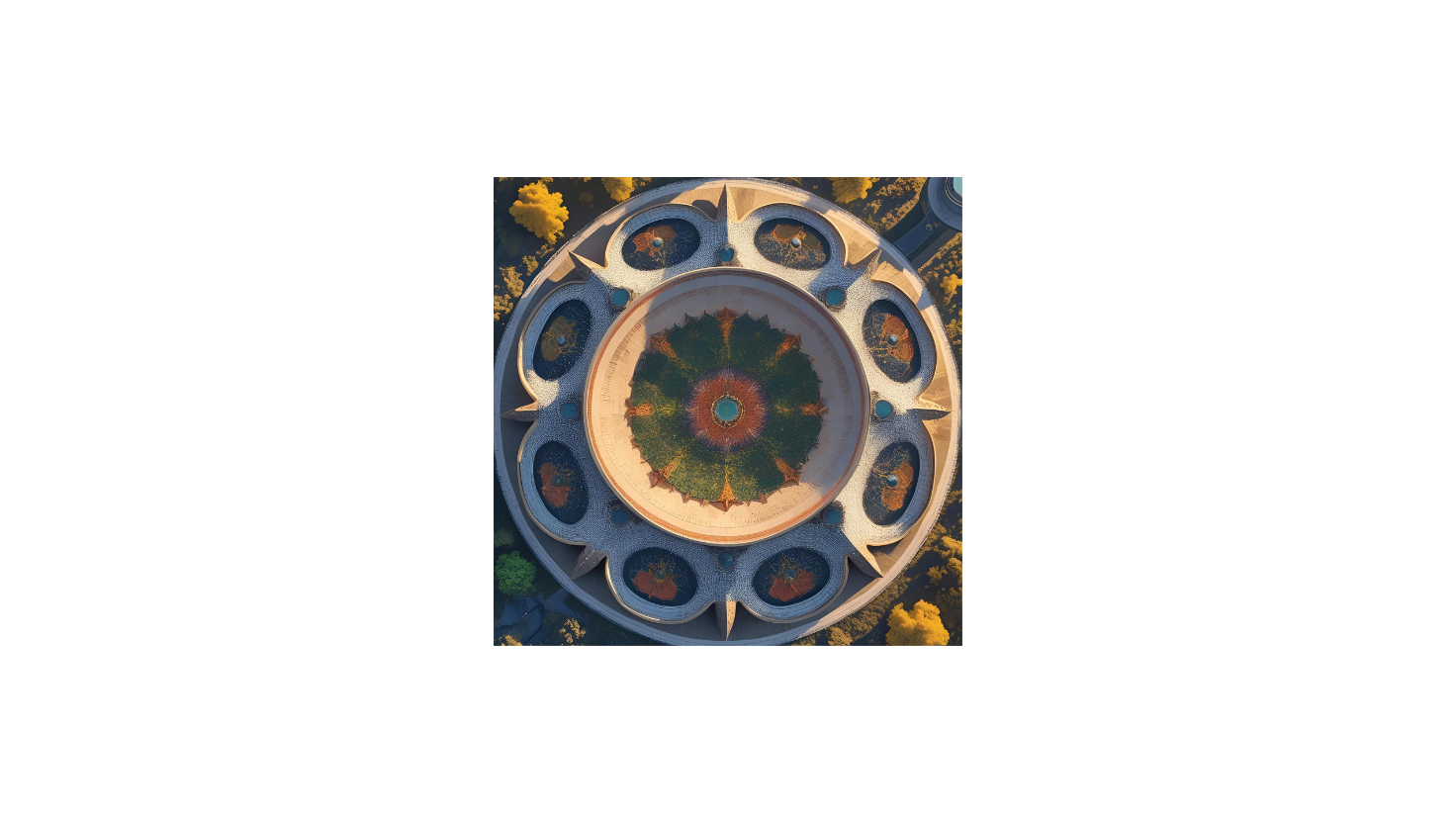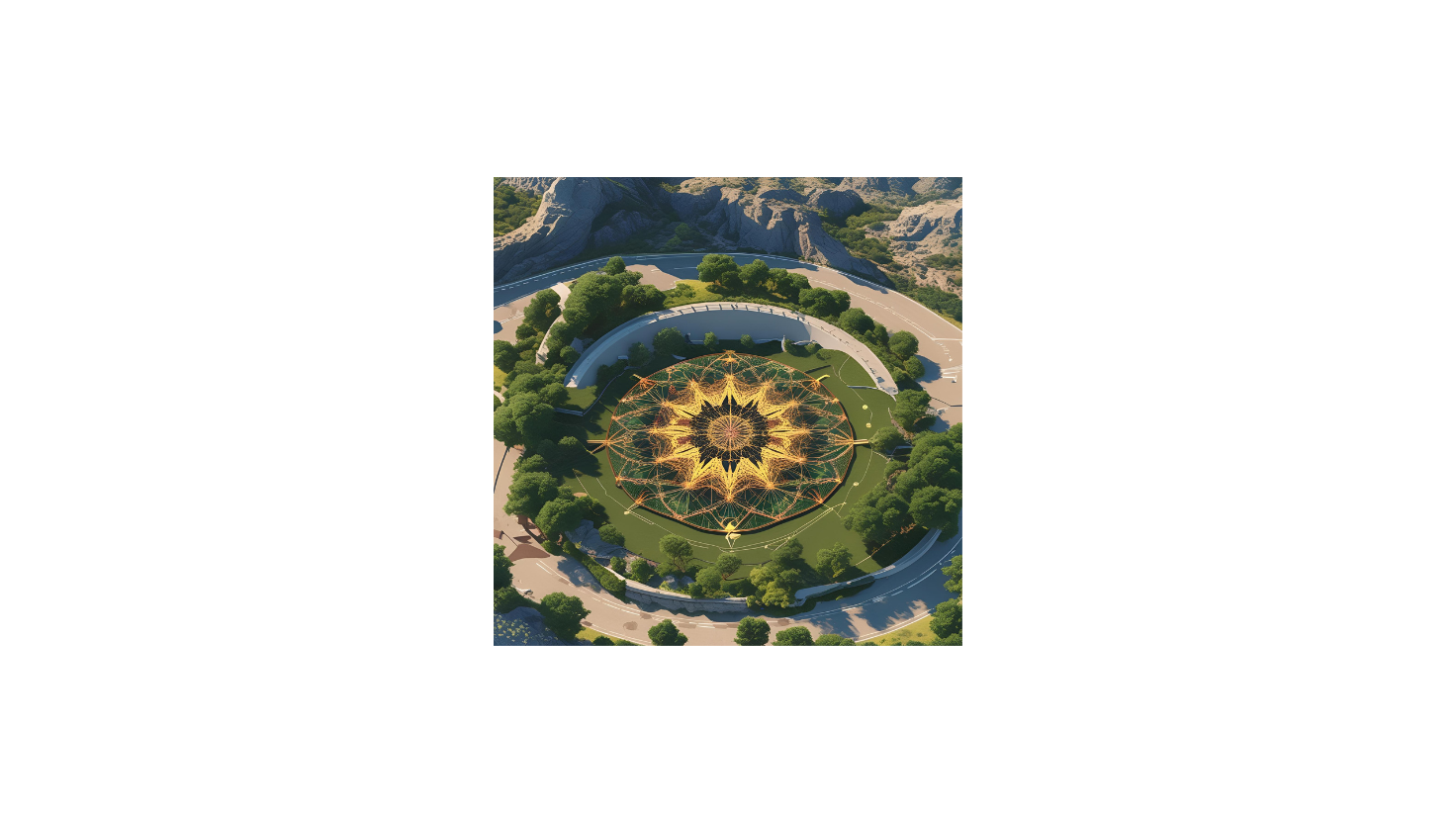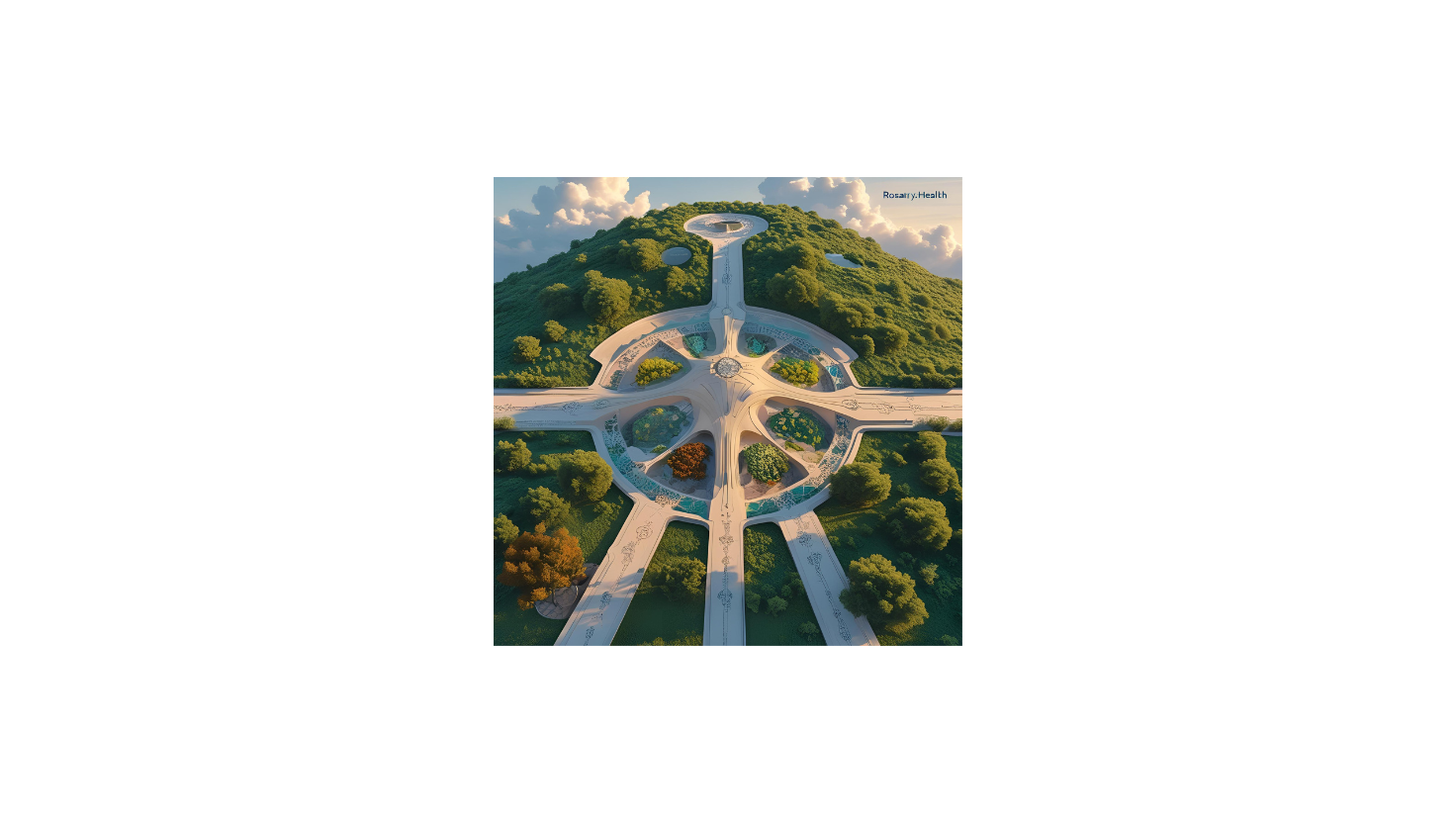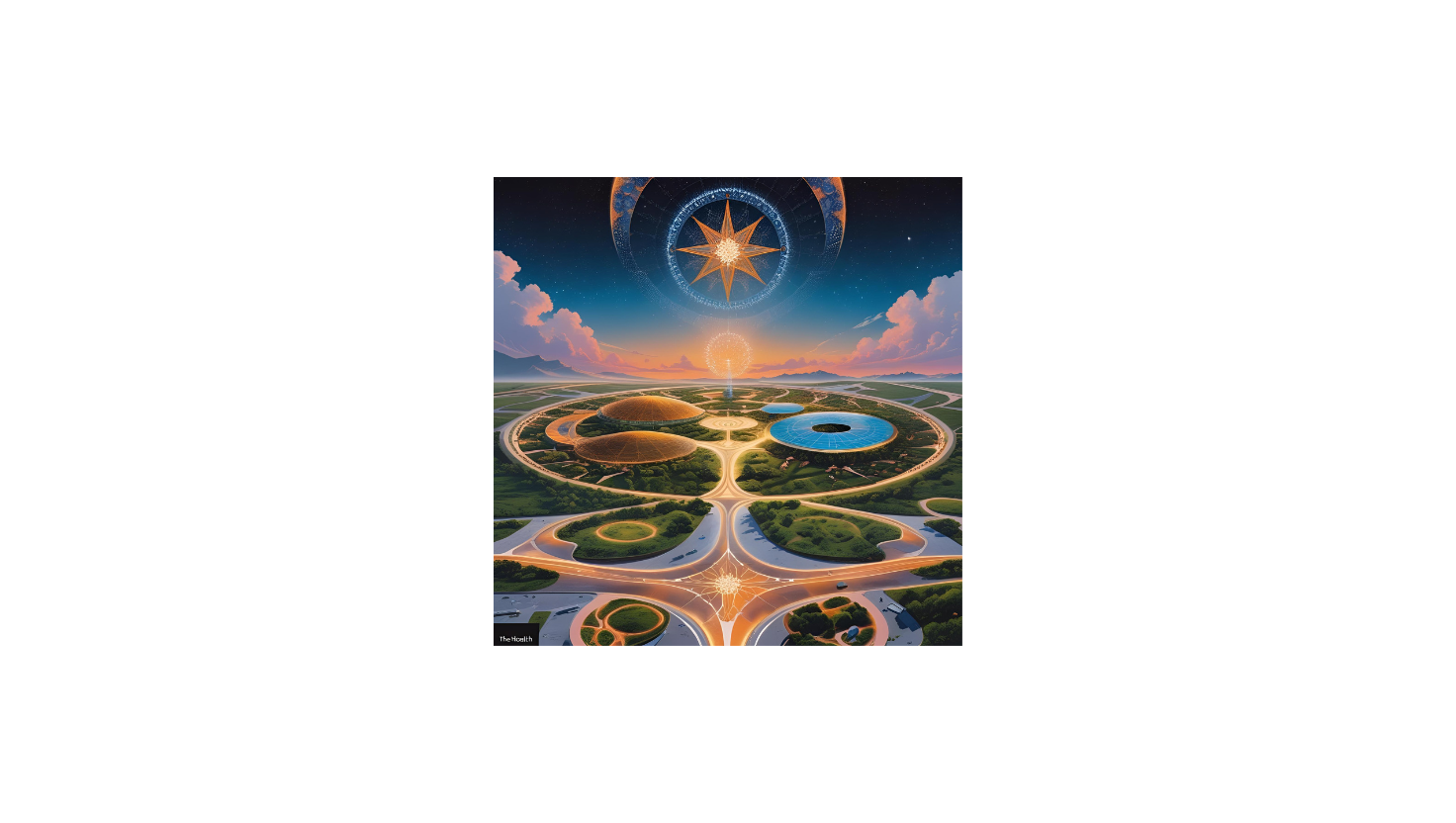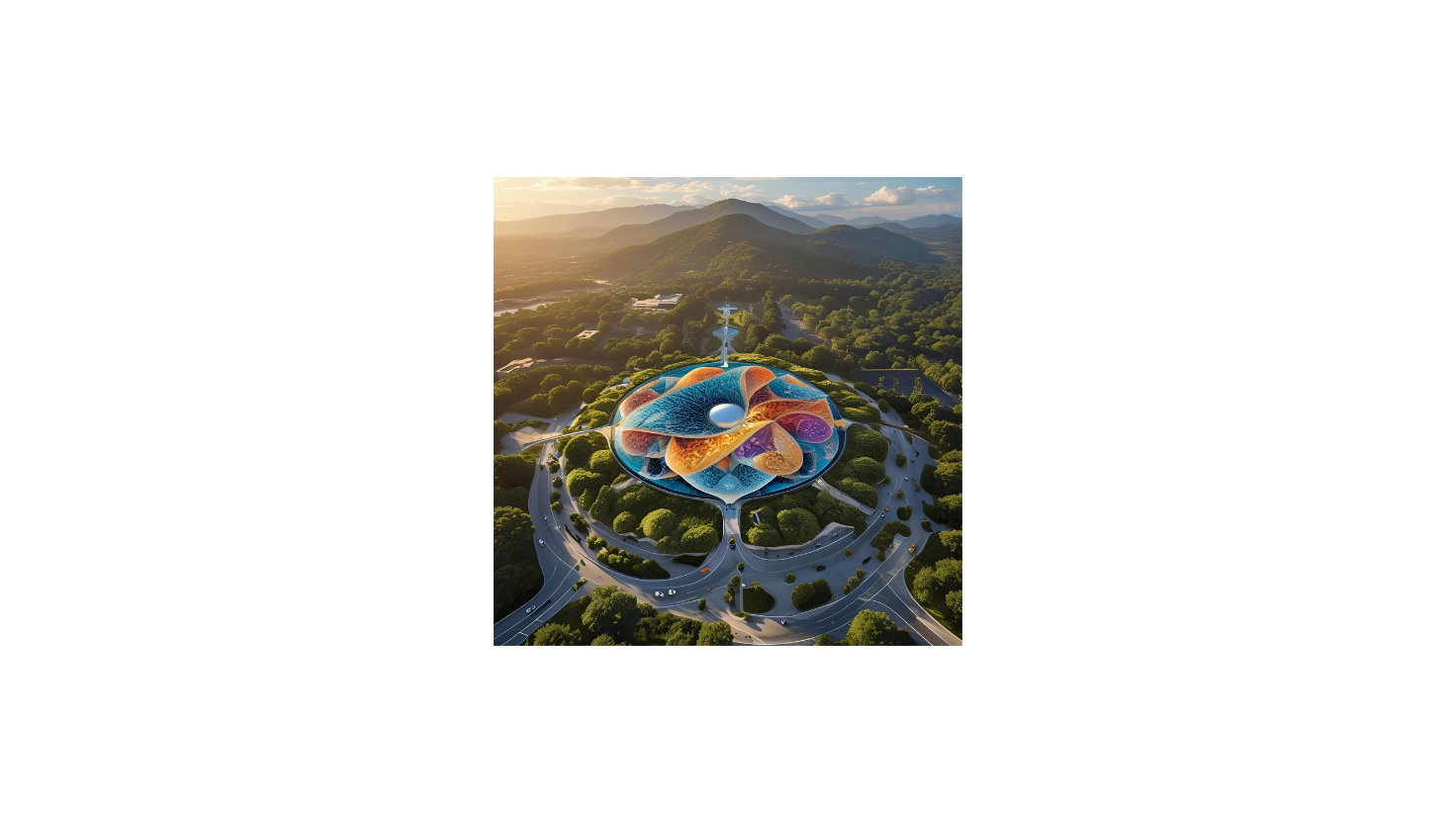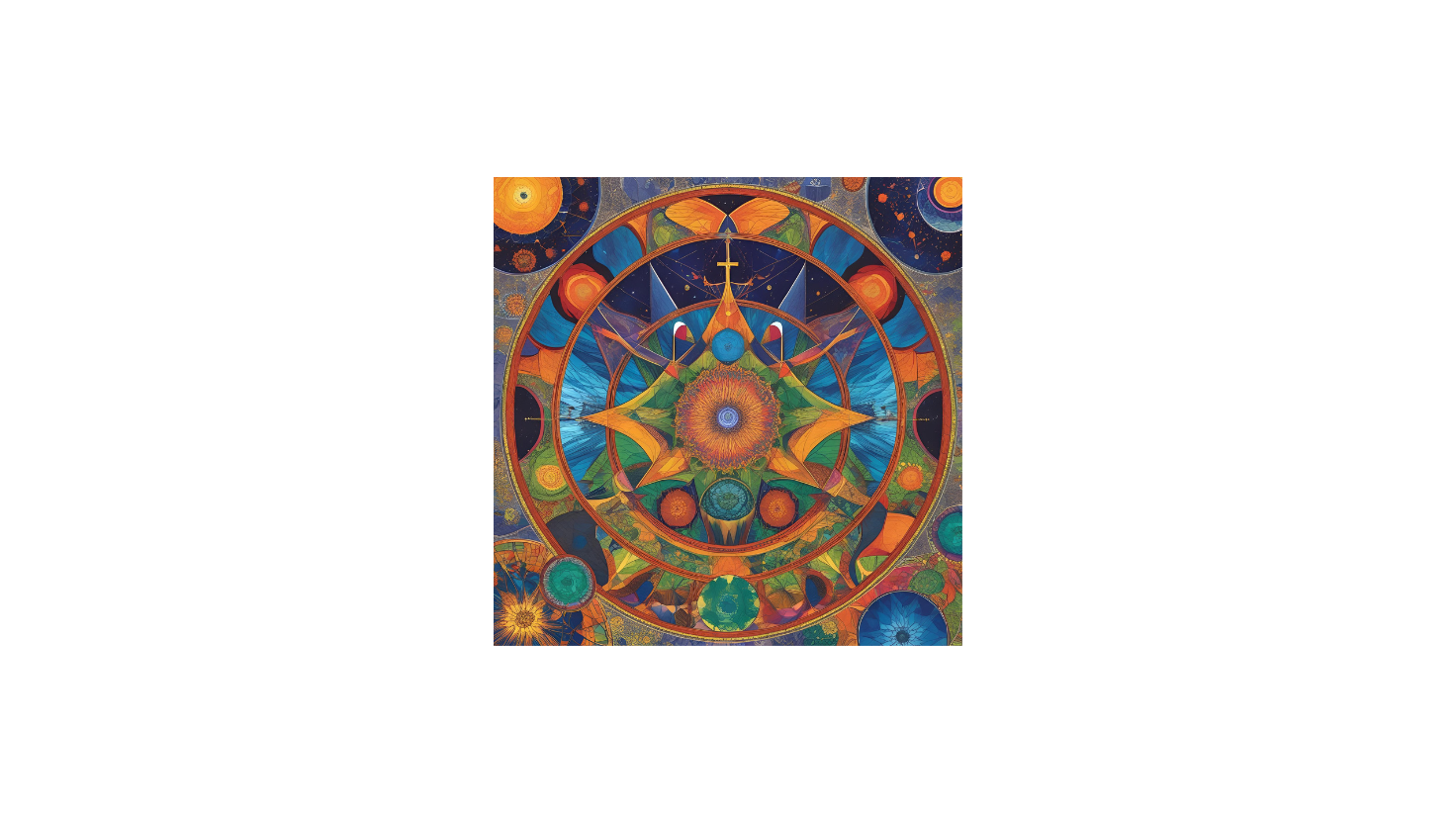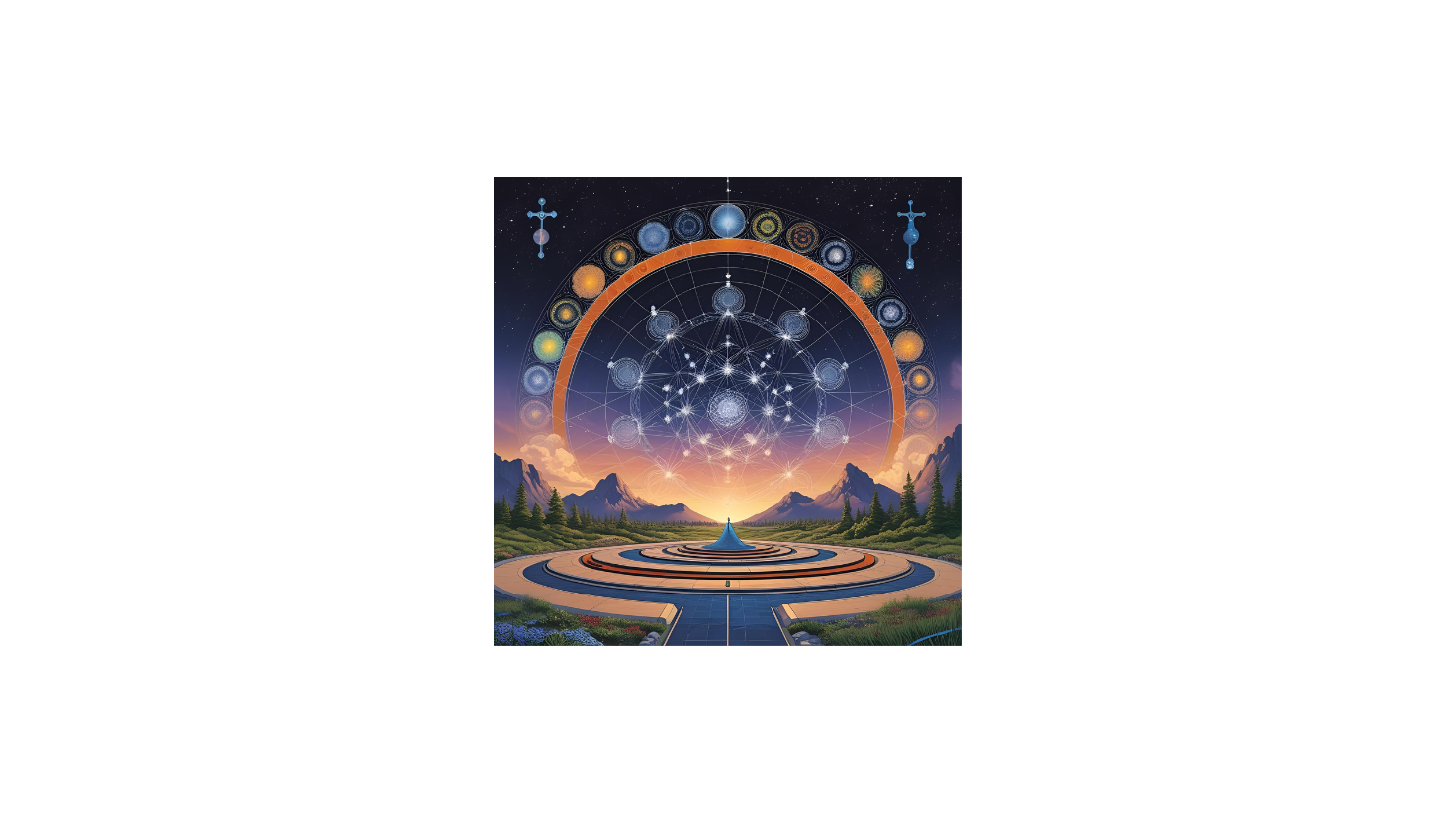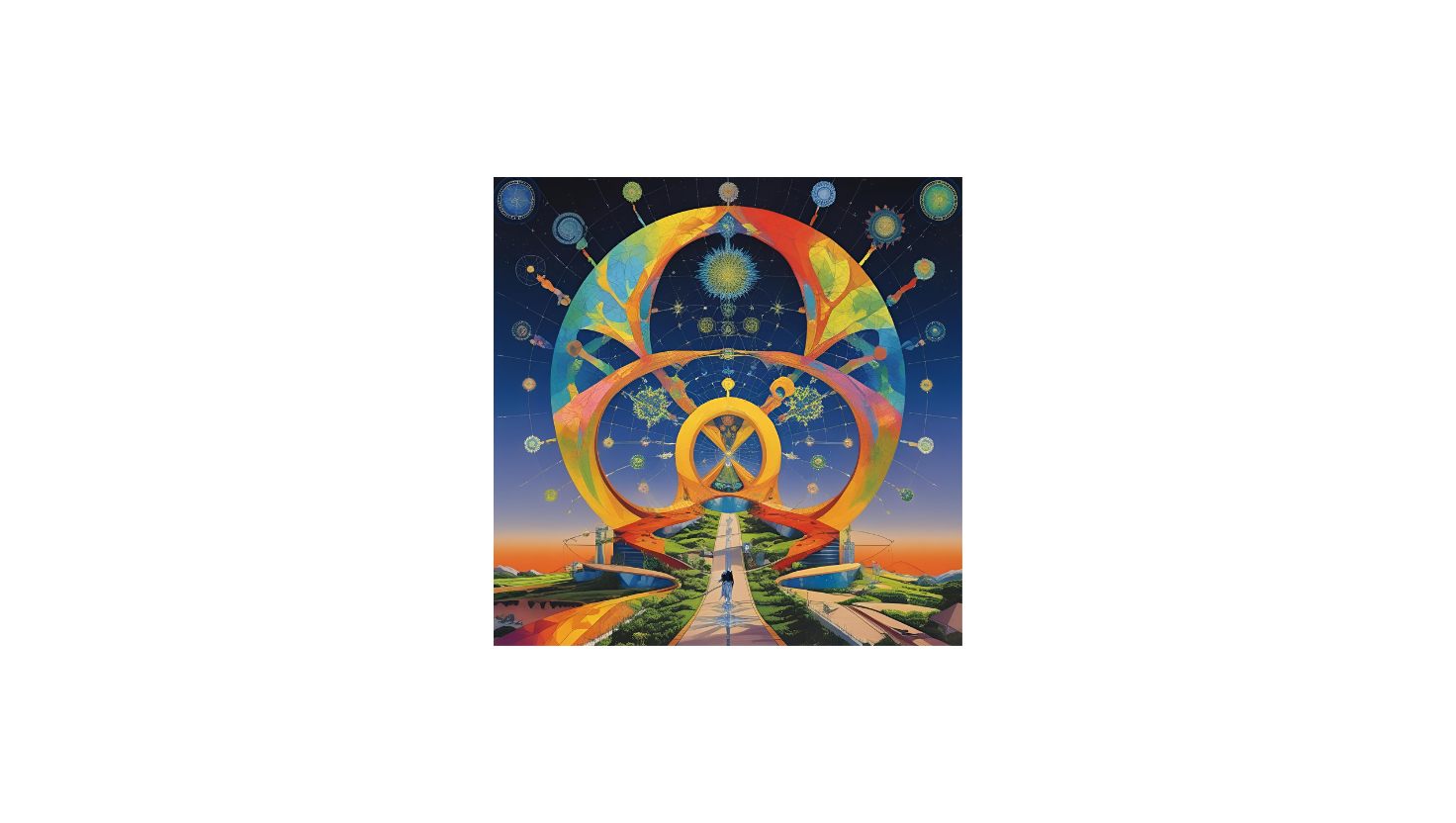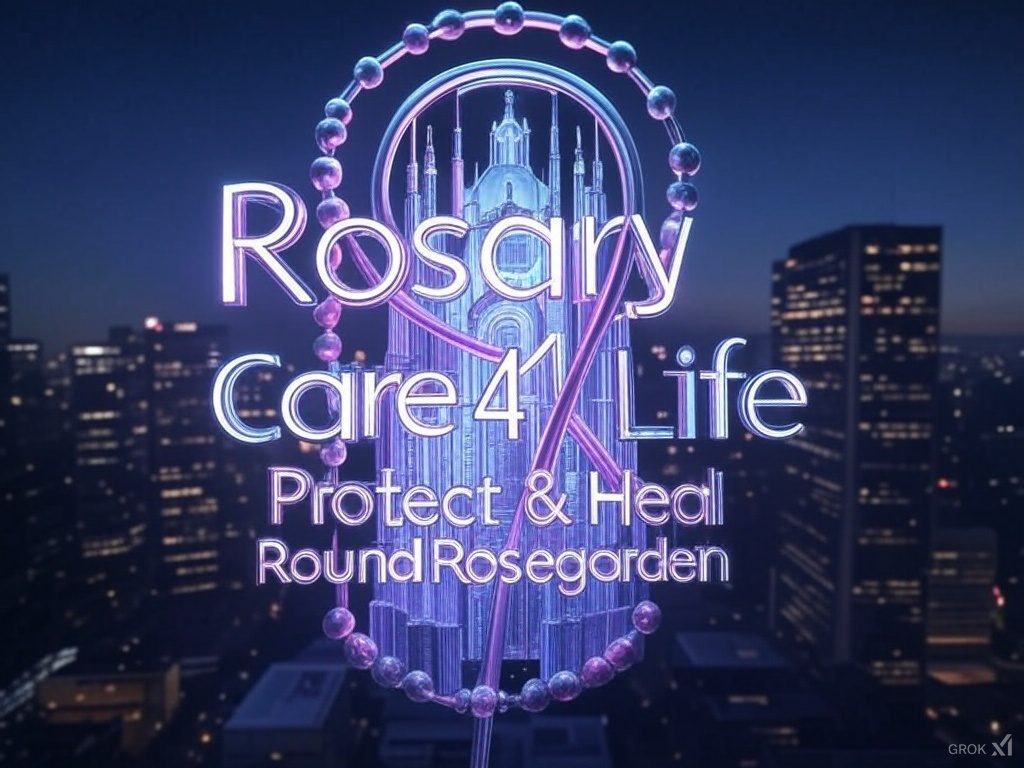

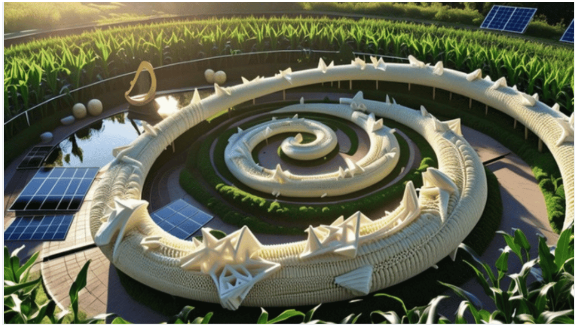

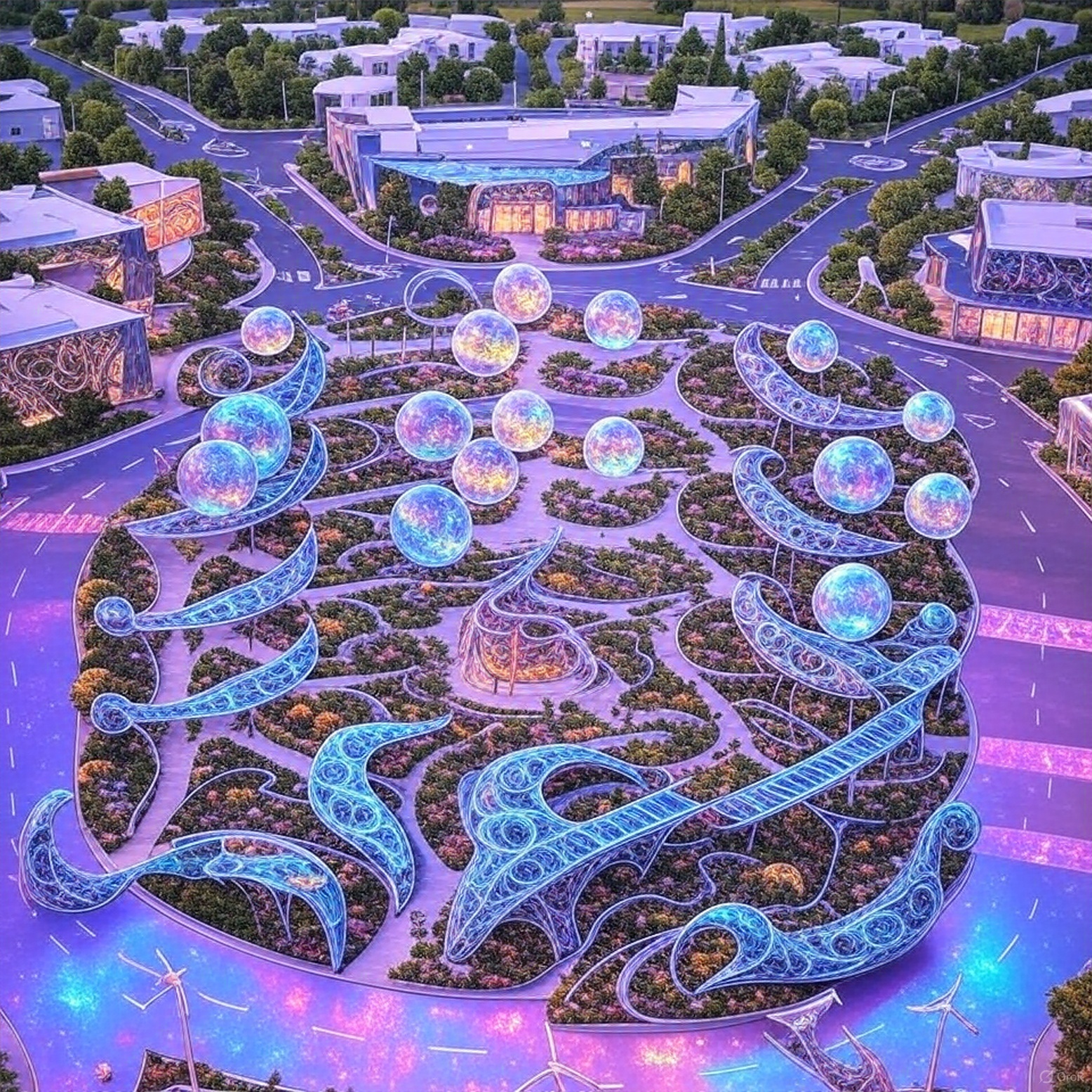
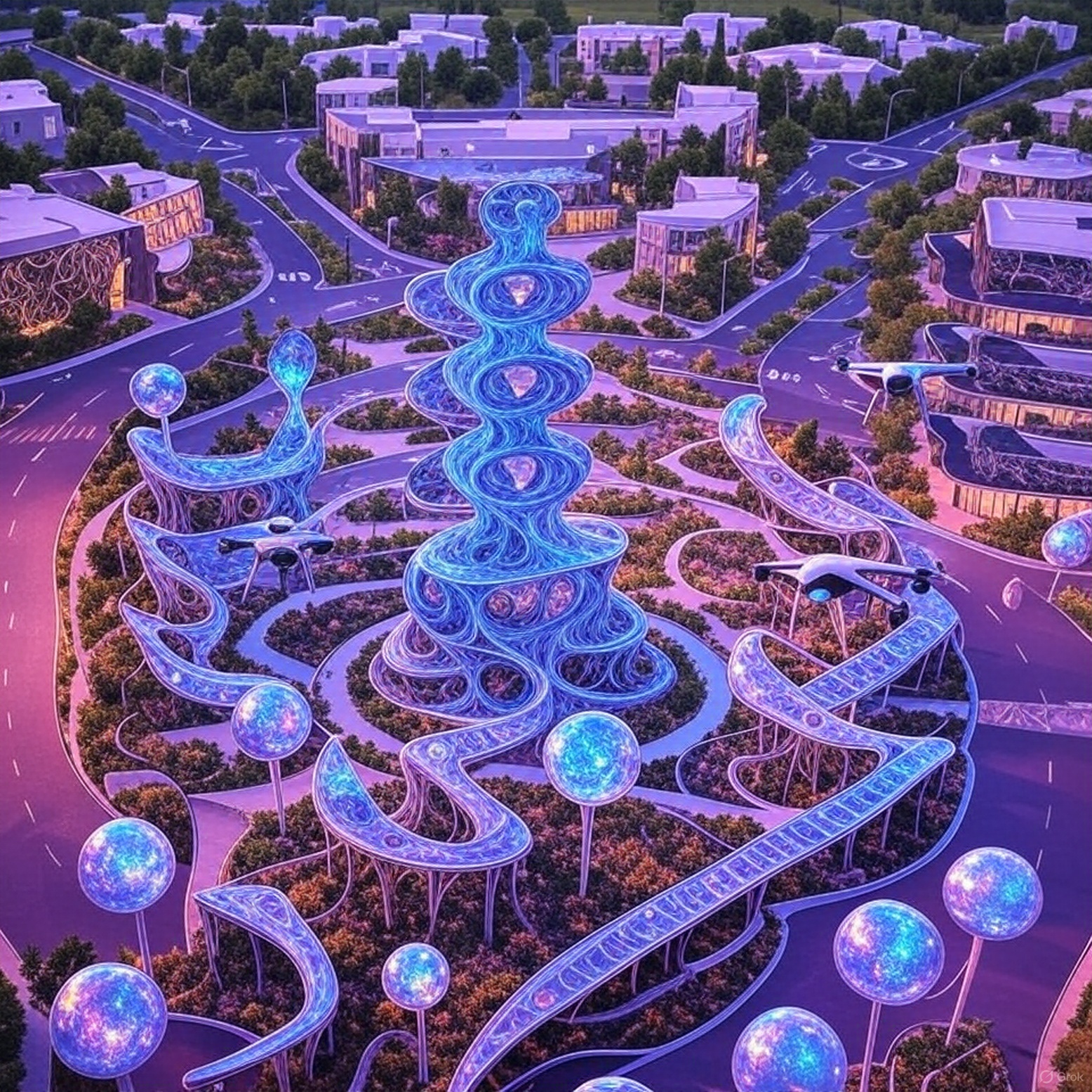
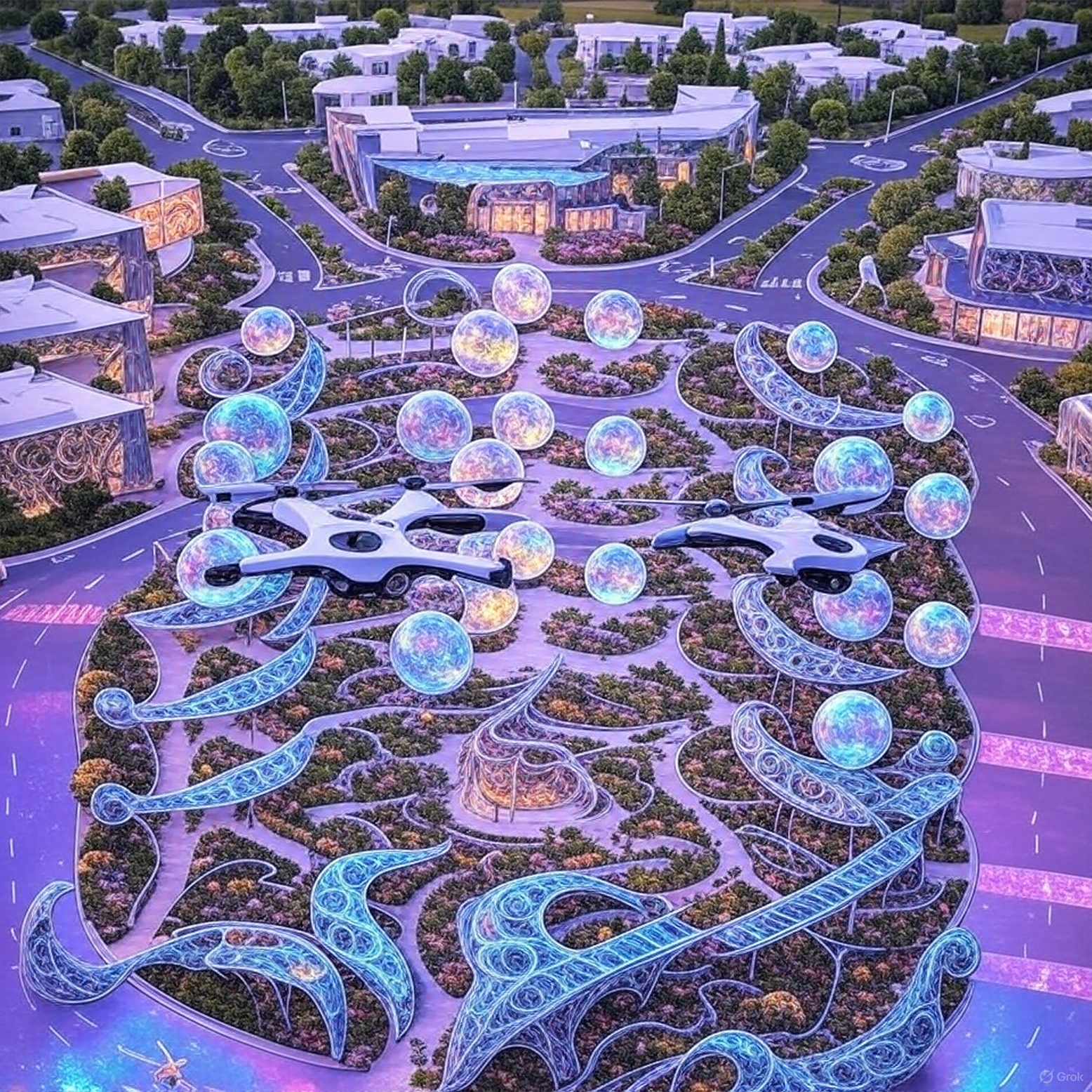
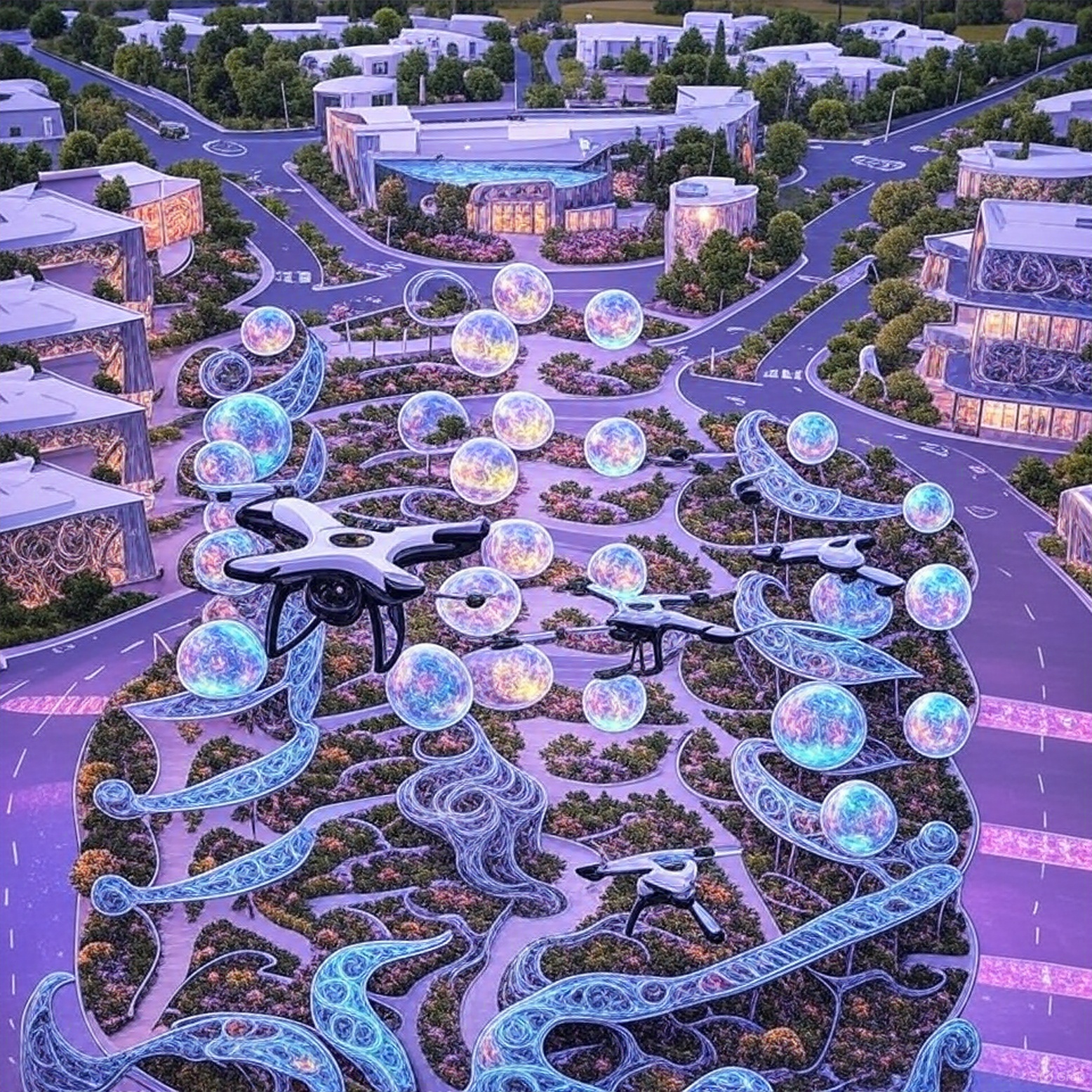
Mit unserer einzigartigen Astra_Fractal-Art erstellte Rosarien©® ,
die für die COP30 in Rio de Janeiro konzipiert sind.
Wir greifen damit die indigene Hochkultur des AMAZONAS bis hin in die Anden Perus auf.
Diese wurde Anfang der 2000ér wiederentdeckt.
Durch neue mathematische Formeln und KI ist es gelungen,
sowohl Kunst als auch Wissenschaft spirituell zu befruchten.
Ökologie und Okonomie werden dadruch zu Prosperität gebracht.
Die Forschungsergebnisse aus dem BIOSIEGEL kommen dabei zur Anwendung.
„Aus einem reinen Herzen kommen Weisheit und Erkenntnis!“
Hier ein Video des Climate Action der COP28 in Dubai:
https://www.canva.com/design/DAF0CatjFpI/QYh1t0DIbaRHrOjHGSe_Rw/watch
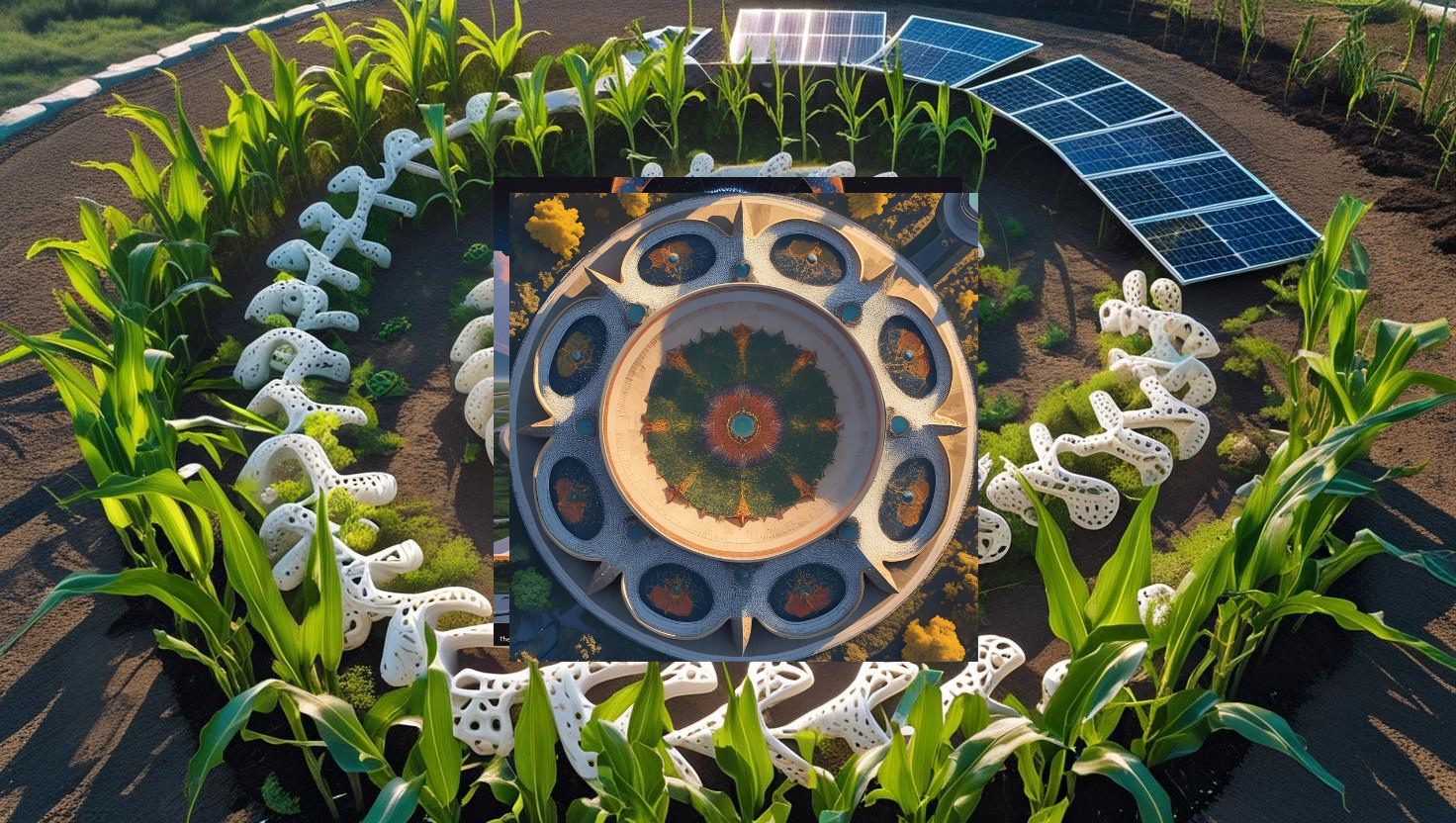
Das Bild zeigt eine kreisförmige Anordnung mit Pflanzen, die Mais oder ähnlichem ähneln, einem zentralen Wasserbecken mit einer Kugel, weißen skulpturalen Elementen, die spiralförmig oder rosenkranzartig angeordnet sind, und Solarpaneelen.
Diese Elemente geben erste Hinweise auf mögliche Bedeutungen und Funktionen.
Forschungsschwerpunkte
Mein nächster Schritt ist die Recherche der einzelnen Komponenten des Konzepts ‚ROSARY Ridgebed Roundabout Culture mit Astro Fraktalkunst‘.
Ich werde mich darauf konzentrieren, ‚Rosary‘ (Rosenkranz) im Kontext von Spiritualität und Sequenz, ‚Ridgebed‘ (Hügelbeet) als landwirtschaftliche Technik und ‚Roundabout‘ (Kreisverkehr) als kreisförmiges Design zu verstehen.
Gleichzeitig werde ich ‚Astro Fraktalkunst‘ erforschen, um ihre visuellen Merkmale und die Anwendung von Fraktalen in der Kunst zu erfassen. Da die Kombination dieser Begriffe sehr spezifisch und wahrscheinlich neu ist, werde ich zunächst die einzelnen Bestandteile untersuchen und dann versuchen, ihre mögliche Verbindung zu synthetisieren.
Nächste Schritte
Ich werde mit der detaillierten Recherche der einzelnen Begriffe beginnen und dann untersuchen, wie Fraktalgeometrie und ‚Astro Fraktalkunst‘ in Landschafts- oder Agrardesigns integriert werden könnten, insbesondere in kreisförmigen Anordnungen.
Abschließend werde ich die spirituellen und symbolischen Elemente, die mit dem ‚Rosenkranz‘ verbunden sind, in Bezug auf Landschaftsgestaltung und Fraktalkunst beleuchten, um ein umfassendes Verständnis für die Bildgenerierung zu entwickeln.
Researching
websitesmeadhunt.com 7 Key Principles of Roundabout Design – Mead & Huntsehinc.com Roundabouts 101: Basic Design Principles for Improved Intersection Safety
– SEH Incst-thomasmore.walsall.sch.uk The Rosary and how to use Rosary Beads – St Thomas More Catholic Schoolamazon.com www.amazon.comen.wikipedia.org Rosary – Wikipedialobostudio.es Sacred Geometry Architecture: The Power of Patterns in Design – Lobo Studiosare.org Conservation Tillage – SARE – Sustainable Agriculture Research and Educationforigo.it Ridging: A Technique You Will Be Hooked To – Forigolivingpermaculturepnw.com How to design a small garden, permaculture style: The Herb Spiralphillypermaculture.com Herb Spirals – Philly Permaculturemarysbloomers.com Native American Medicine Wheel Gardenswildfen.com Tag: medicine wheel garden – Wild Fenpermalogica.com Permaculture & Sacred Geometry: Designing with Nature’s Master Patterns – permalogicastockcake.com Free Mystical Fractal Forest Image | Download at StockCakenumberanalytics.com Exploring the Mathematics Behind Fractal Dimension in Nature – Number Analyticsars.usda.gov Fractals—A Bridge to the Future for Soil Science – USDA ARSnews.umich.edu When art imitates life’s mathematics: Fractals and how we perceive treesdocs.lib.purdue.edu A fractal art approach to the three-body problem – Purdue e-Pubsnumberanalytics.com Revolutionizing Art and Design Through Fractal Dimension Concepts – Number Analyticscelestialchimes.com Where Science and Ancient Wisdom Converge: Fractal Geometry – Celestial Chimes Astrology
Verständnis der Schlüsselkonzepte
Ich habe die einzelnen Komponenten des Konzepts ‚ROSARY Ridgebed Roundabout Culture mit Astro Fraktalkunst‘ detailliert untersucht.
‚Rosenkranz‘ bezieht sich auf eine Kette von Perlen für Gebete und Meditationen, die eine spirituelle und sequentielle Bedeutung hat.
‚Ridgebed‘ beschreibt eine landwirtschaftliche Technik mit erhöhten Beeten zur Verbesserung von Drainage und Ertrag, was gut zu den Pflanzen im Bild passt.
‚Roundabout‘ steht für ein kreisförmiges Design, das in der Landschaftsgestaltung ästhetisch genutzt wird.
‚Fraktalkunst‘ zeichnet sich durch Selbstähnlichkeit und unendliche Komplexität aus, die sich in der Natur wiederfindet und mathematisch generiert werden kann.
‚Astro Fraktalkunst‘ erweitert dies um kosmische oder himmlische Muster, wie sie in astrophysikalischen Problemen oder alten Weisheiten wie ‚Indras Netz der Juwelen‘ zu finden sind. Integration von Fraktalen in die Landschaftsgestaltung Ein wichtiger neuer Einblick ist die direkte Verbindung von Fraktalgeometrie und Landschaftsgestaltung, insbesondere im Permakultur-Design.
Ich habe gelernt, dass Muster wie die Fibonacci-Sequenz und der Goldene Schnitt sowie Fraktale genutzt werden, um effiziente und widerstandsfähige Landschaften zu schaffen. Beispiele hierfür sind spiralförmige Kräutergärten, die Mikroklimata erzeugen, und Mandala-Gärten, die kreisförmig angelegt sind und Erträge steigern können.
Dies zeigt, wie ‚Astro Fraktalkunst‘ visuell in die ‚Ridgebed Roundabout Culture‘ integriert werden könnte, indem kosmische Fraktalmuster in die Anordnung der Beete oder zentrale Elemente einfließen.
Synthese und nächste Schritte
Da es keine direkte Definition für die spezifische Kombination ‚ROSARY Ridgebed Roundabout Culture‘ gibt, werde ich diese als ein neuartiges Konzept interpretieren, das die spirituellen, landwirtschaftlichen und gestalterischen Aspekte miteinander verbindet.
Meine nächste Aufgabe ist es, die Prinzipien der ‚Astro Fraktalkunst‘ konkret auf die visuellen Elemente dieser Kultur anzuwenden.
Ich werde mich darauf konzentrieren, wie kosmische und fraktale Muster in den ‚Ridgebeds‘, der ‚Roundabout‘-Struktur und den ‚Rosary‘-Elementen visuell umgesetzt werden können, um die vom Nutzer gewünschten Bilder zu generieren.
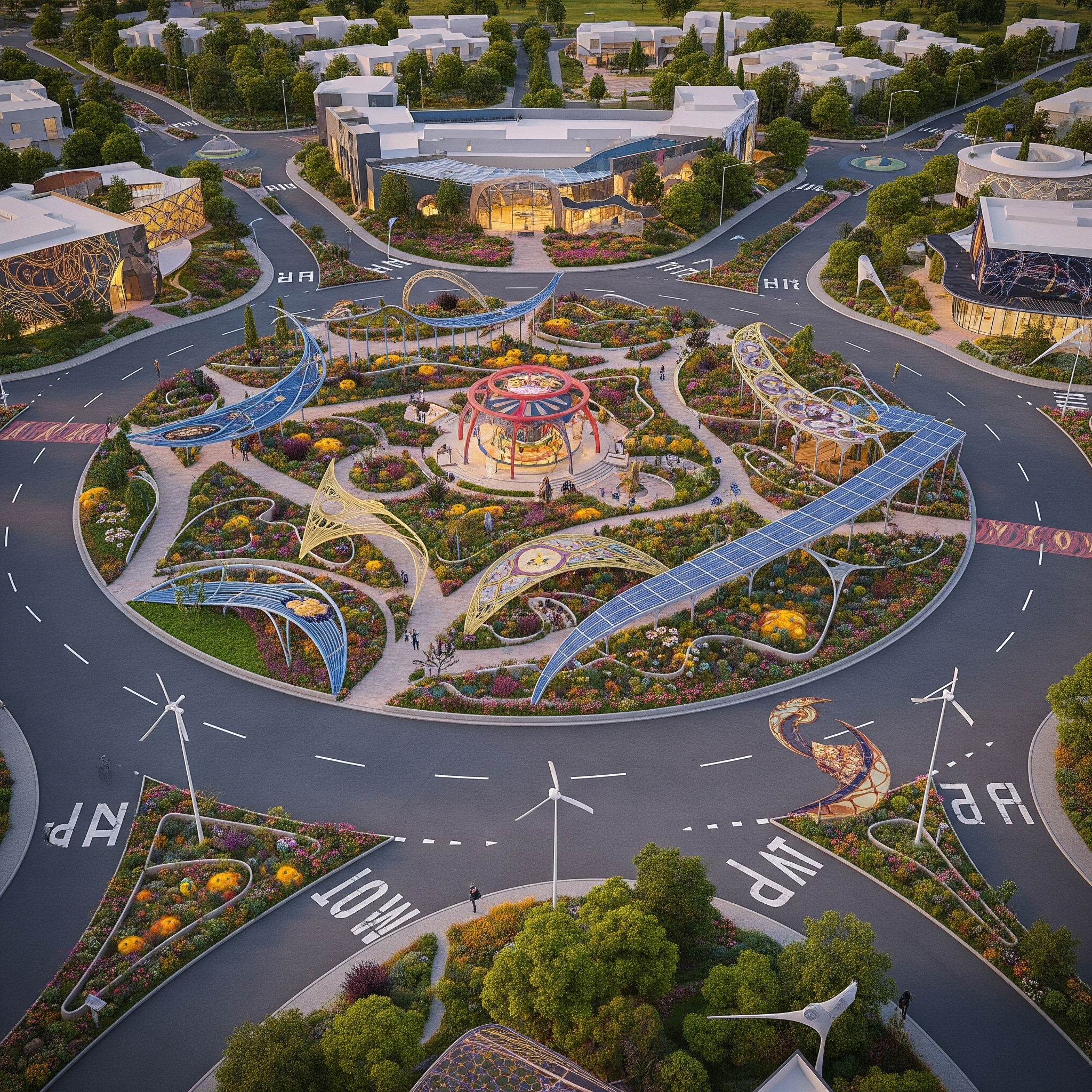
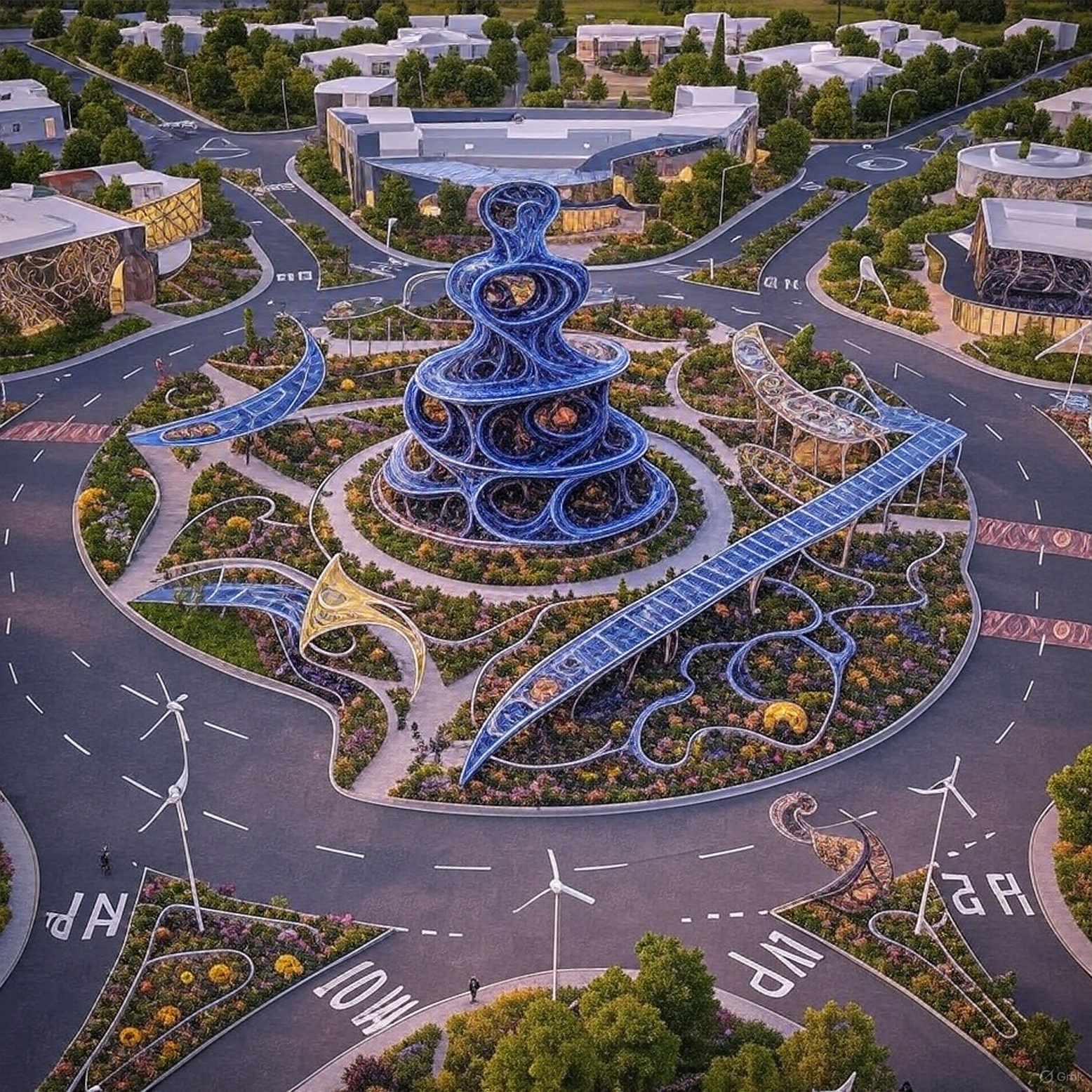
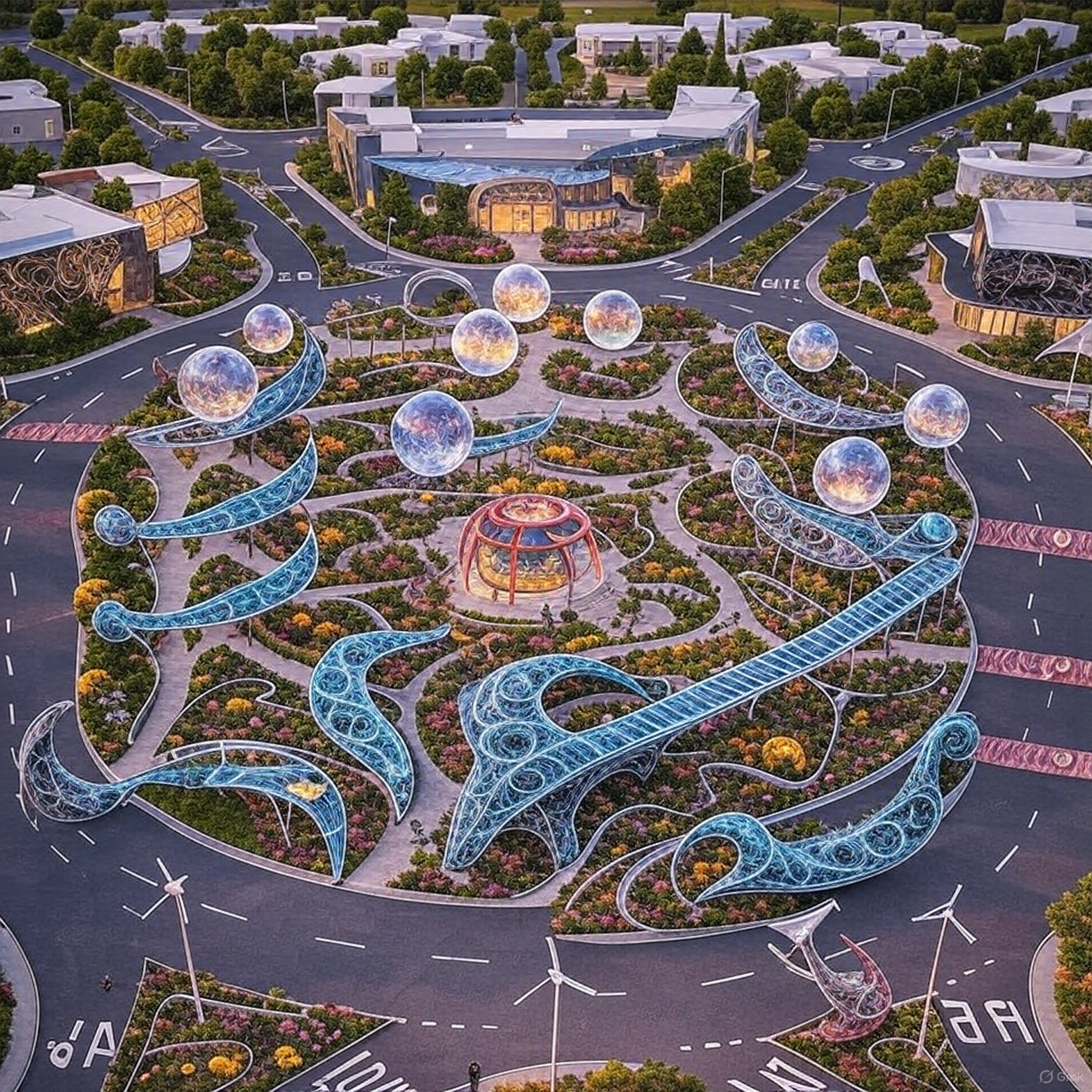
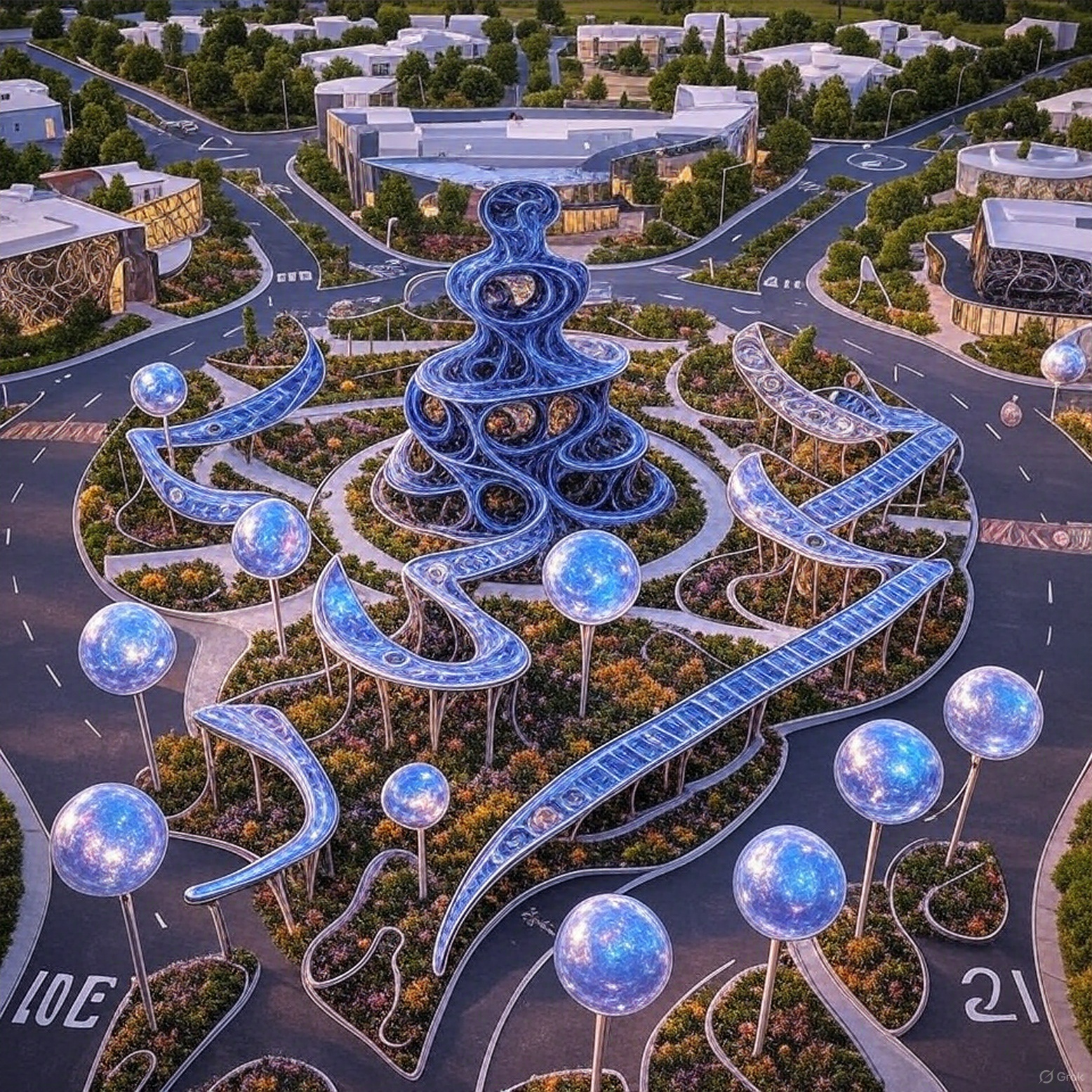
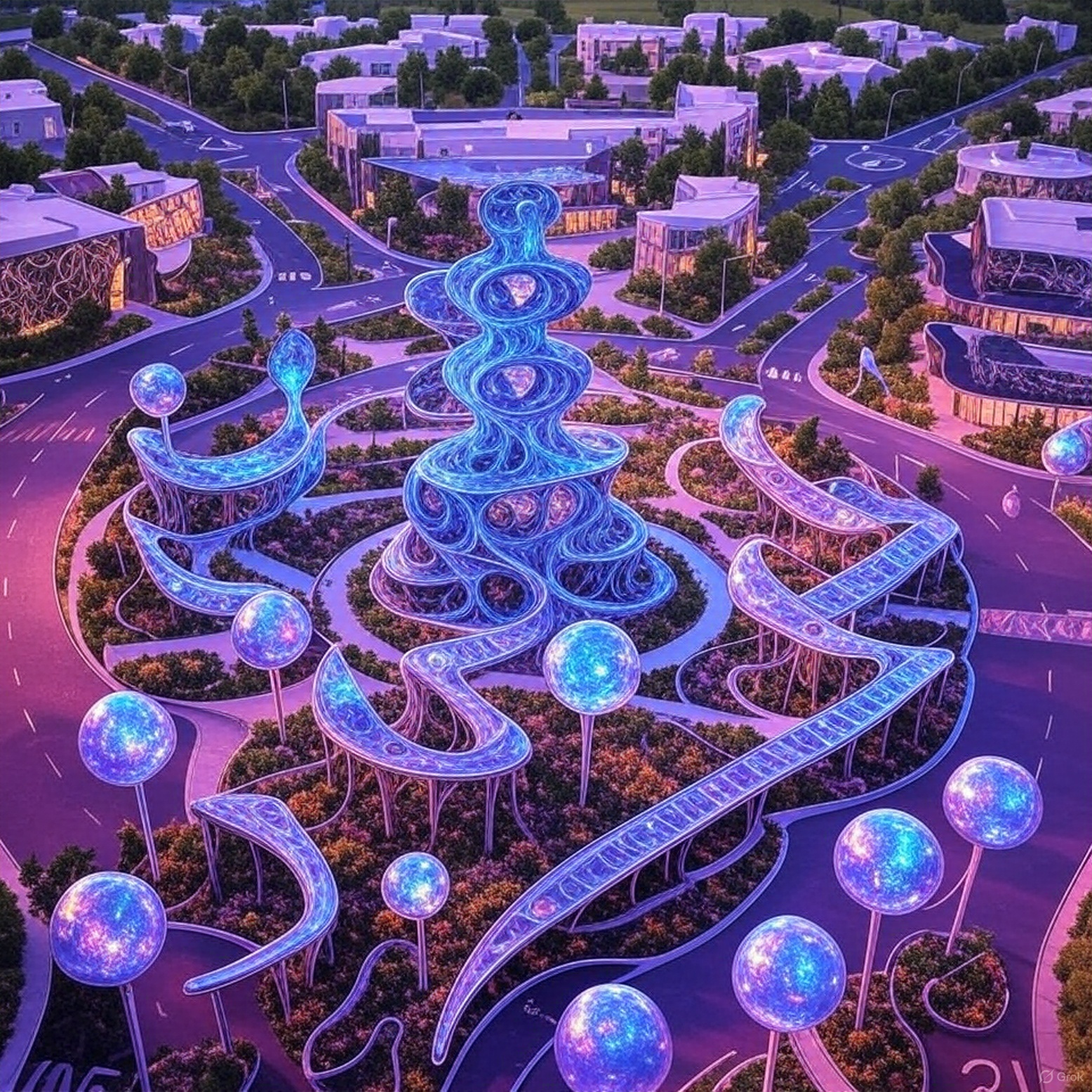
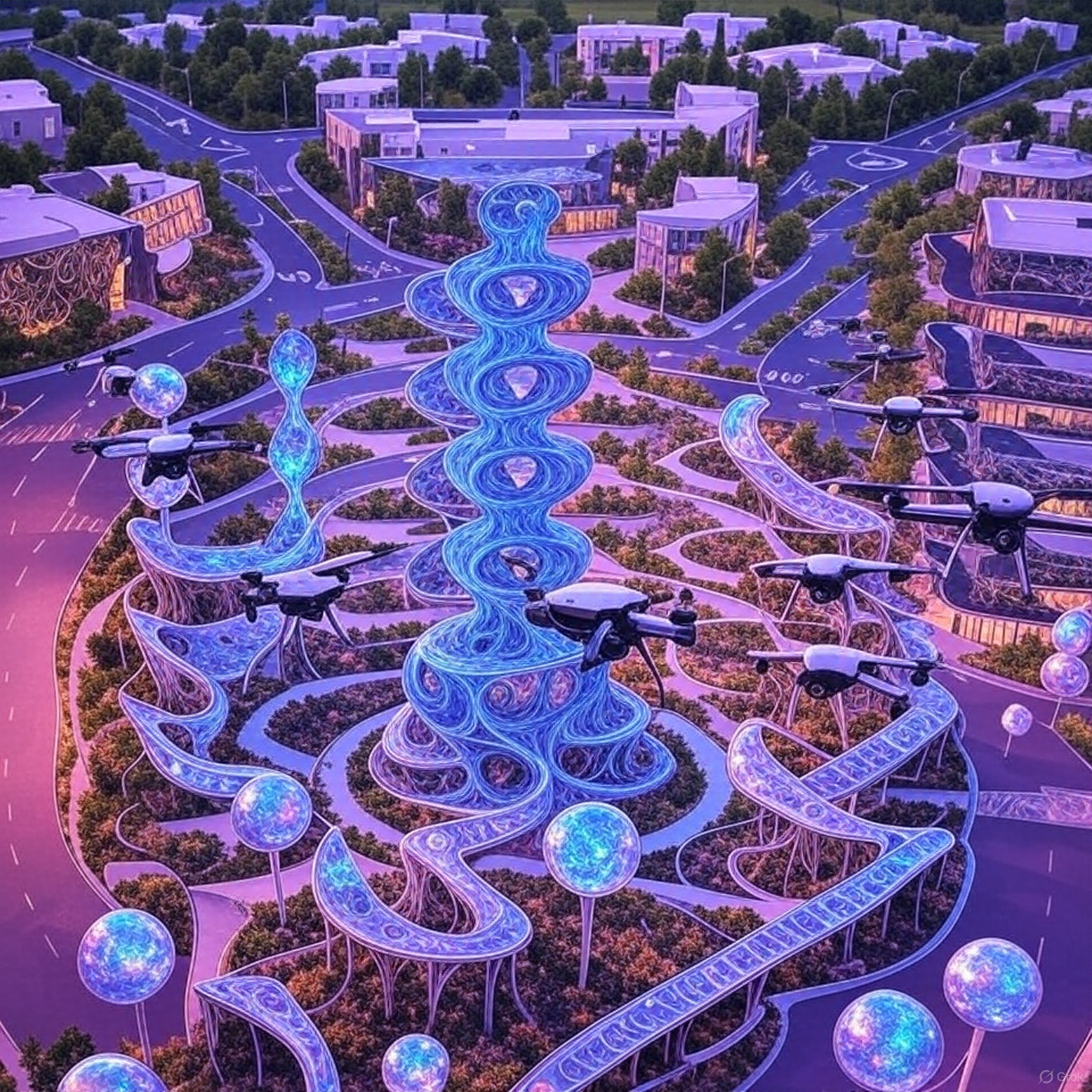
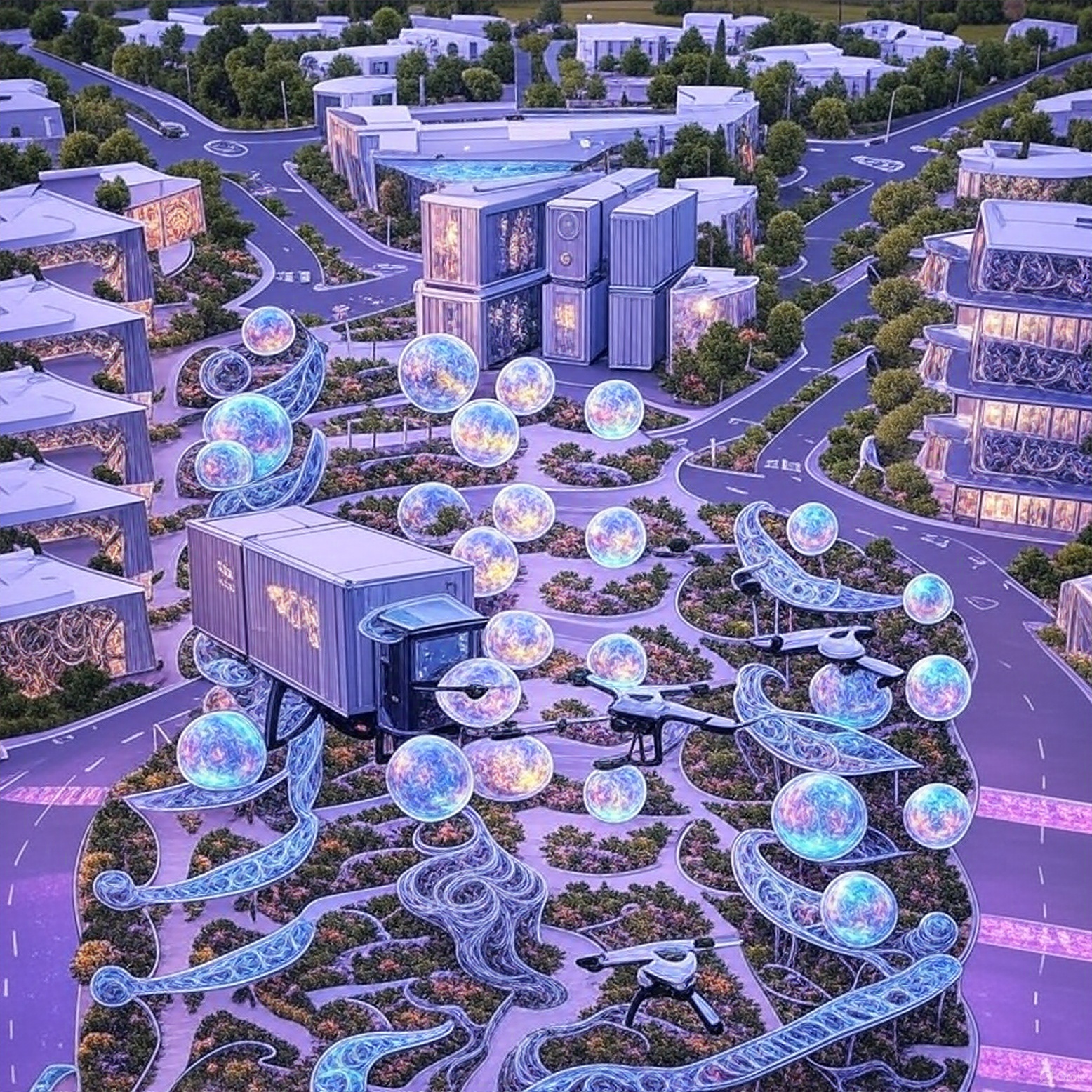
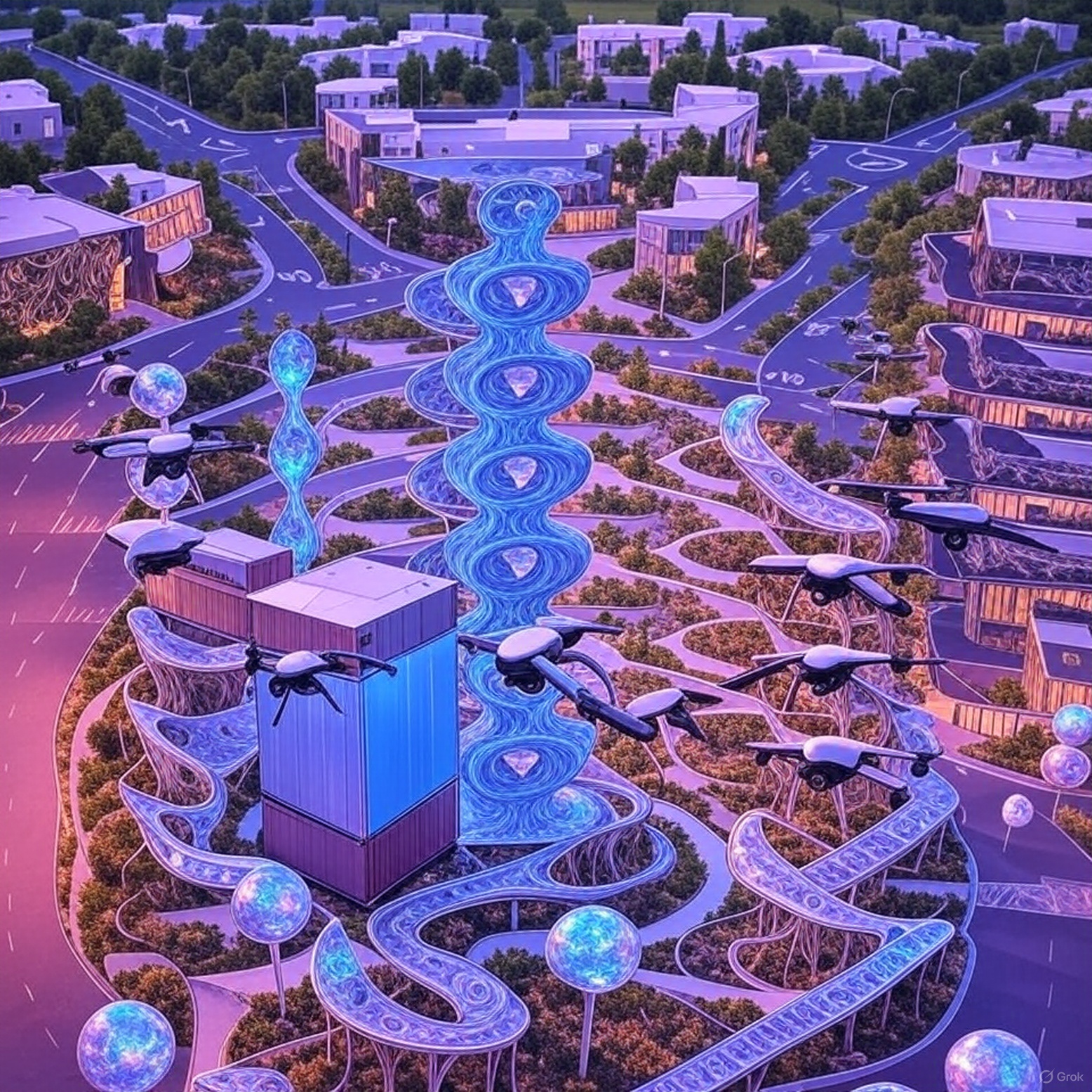
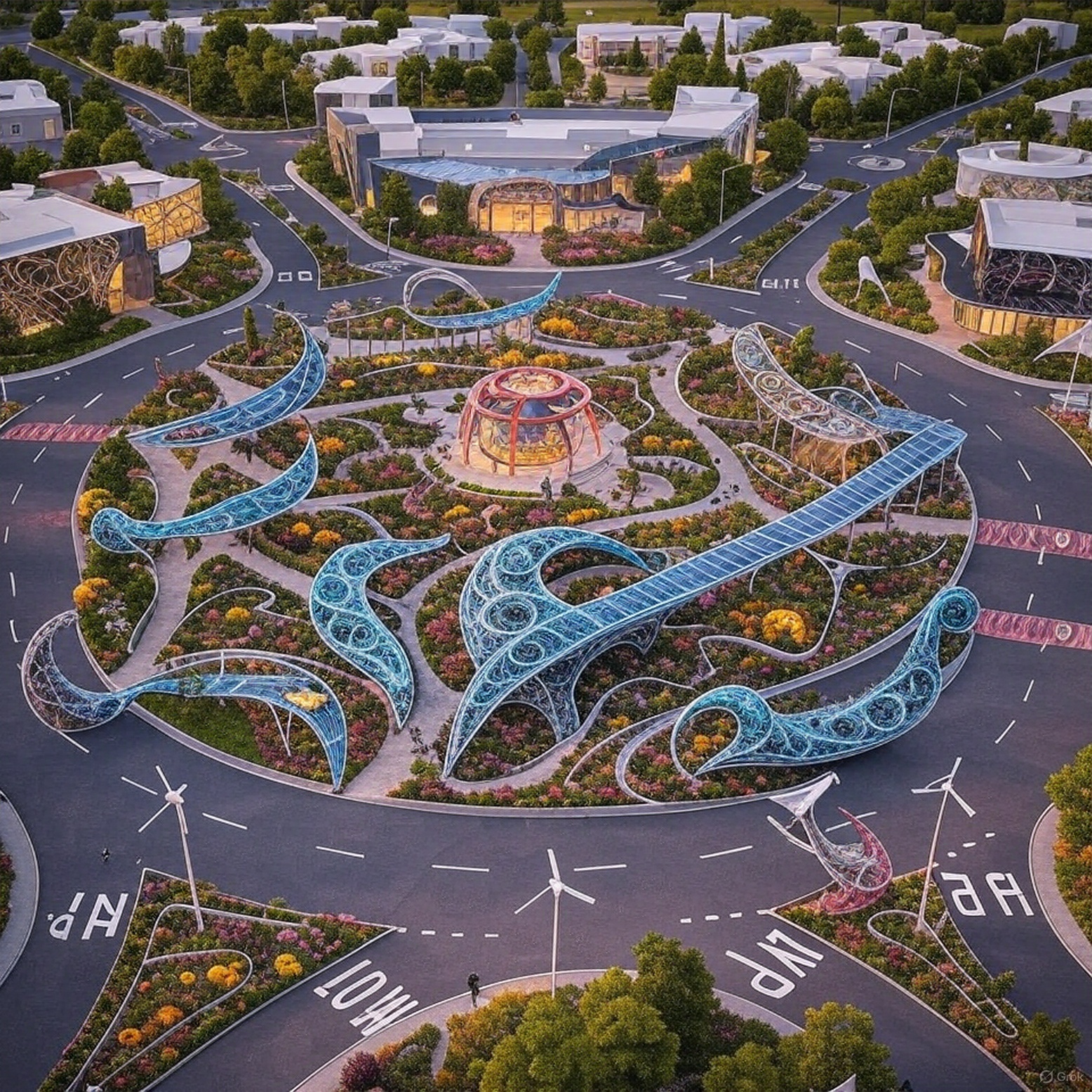
Alright, I’ve got this glorious design based on the concept of „ROSARY Ridgebed Roundabout Culture with Astro Fraktalkunst.“
This is providing
an image with a circular arrangement of plants resembling corn, a central water basin with a sphere, white sculptural elements arranged in a spiral or rosary-like pattern, and solar panels. They’ve also done some research on the individual components and how they might integrate fractal geometry into landscape design.


First, I need to understand the key concepts:
-
Rosary (Rosenkranz): This refers to a string of beads used for prayer and meditation, symbolizing spirituality and sequence.
-
Ridgebed (Hügelbeet): This is an agricultural technique using raised beds to improve drainage and yield, which fits with the plants in the image.
-
Roundabout (Kreisverkehr): This represents a circular design, often used aesthetically in landscape architecture.
-
Fraktalkunst: This is fractal art, characterized by self-similarity and infinite complexity, often found in nature and generated mathematically.
-
Astro Fraktalkunst: This extends fractal art to include cosmic or celestial patterns, like those in astrophysical problems or ancient wisdom such as Indra’s Net.
The user has also discovered that fractal geometry is directly connected to landscape design, especially in permaculture, using patterns like the Fibonacci sequence and the golden ratio to create efficient and resilient landscapes. Examples include spiral herb gardens and mandala gardens.
Since there’s no direct definition for „ROSARY Ridgebed Roundabout Culture,“ I need to interpret it as a novel concept that combines spiritual, agricultural, and design aspects.
Now, to create a glorious design, I should focus on integrating cosmic and fractal patterns into the ridgebeds, the roundabout structure, and the rosary elements.
Let me think about how to visually implement this:
-
Ridgebeds: These could be arranged in a fractal pattern, perhaps following a spiral or a branching structure that mimics natural forms like tree branches or river deltas.
-
Roundabout: The circular design could incorporate fractal elements in its layout, maybe with pathways or plant beds that repeat at different scales.
-
Rosary Elements: These could be represented by a sequence of sculptural elements or plantings that follow a fractal pattern, symbolizing the spiritual sequence of the rosary.
Additionally, since the image includes a central water basin with a sphere and solar panels, I should consider how these fit into the design.
The sphere in the water basin could represent a celestial body, tying into the „Astro“ aspect. The solar panels suggest a focus on sustainability and renewable energy, which could be integrated into the design as part of the fractal patterns or as separate elements that complement the overall aesthetic.
Let me sketch a rough idea:
-
The roundabout could be designed with a central island that features the water basin and sphere, surrounded by ridgebeds arranged in a fractal spiral pattern.
-
The ridgebeds could be planted with crops or flowers that follow color gradients or patterns that enhance the fractal appearance.
-
Sculptural elements, perhaps in the form of prayer beads or abstract shapes, could be placed along the spiral path, representing the rosary.
-
Solar panels could be integrated into the design as part of the sculptural elements or placed around the perimeter in a way that complements the fractal patterns.
To make this design glorious, I should aim for a harmonious blend of functionality and aesthetics, where the fractal patterns not only look beautiful but also serve practical purposes like optimizing space, improving drainage, or creating microclimates.
I should also consider the spiritual aspect, perhaps by incorporating elements that encourage meditation or reflection, such as quiet seating areas or reflective surfaces.
Let me refine this idea:
-
The central sphere could be a reflective globe, symbolizing the universe and providing a focal point for meditation.
-
The water basin could have a fractal pattern in its design, maybe with tiles or stones arranged in a self-similar pattern.
-
The ridgebeds could be tiered, with each level representing a different scale of the fractal, and planted with a variety of crops that provide both food and visual interest.
-
The sculptural elements could be interactive, perhaps with inscriptions or symbols that relate to the rosary or spiritual themes.
-
Solar panels could be mounted on structures that mimic natural forms, like tree branches, integrating them seamlessly into the landscape.
This design should not only be visually stunning but also functional and sustainable, aligning with the principles of permaculture and renewable energy.
I think I’ve got a solid concept here. Now, I need to communicate this to the user in a way that’s clear and inspiring.
Based on the pre-analysed patterns and the provided image, I have developed a comprehensive design concept for the „ROSARY Ridgebed Roundabout Culture with Astro Fraktalkunst.“ This design integrates spiritual, agricultural, and aesthetic elements through the use of fractal geometry and cosmic patterns, creating a harmonious and functional landscape. Below is a detailed breakdown of the design, incorporating the key components of the concept.
Design Concept: ROSARY Ridgebed Roundabout Culture with Astro Fraktalkunst
1. Central Roundabout with Cosmic Focal Point
-
Water Basin and Sphere: At the heart of the roundabout is a circular water basin containing a reflective sphere, symbolizing a celestial body and tying into the „Astro“ aspect of the design. The sphere serves as a meditative focal point, representing the universe and encouraging reflection. The water basin itself features a fractal-inspired design, with tiles or stones arranged in a self-similar pattern to evoke infinite complexity.
-
Solar Panels: Surrounding the central island, solar panels are integrated into sculptural structures that mimic natural forms, such as tree branches or fractal patterns. These panels not only provide renewable energy but also blend seamlessly into the landscape, enhancing the aesthetic while promoting sustainability.
2. Ridgebeds in Fractal Spiral Arrangement
-
Fractal Ridgebeds: The ridgebeds are arranged in a fractal spiral pattern radiating from the central roundabout. This design mimics natural forms like tree branches or river deltas, optimizing space and improving drainage. Each ridgebed is tiered, with levels representing different scales of the fractal, creating a visually striking and functional agricultural system.
-
Plant Selection: The ridgebeds are planted with a variety of crops or flowers that follow color gradients or patterns, enhancing the fractal appearance. Native plants are prioritized to support local ecosystems and pollinators, aligning with sustainable practices. The circular arrangement also creates microclimates, improving growing conditions and yields.
3. Rosary-Inspired Sculptural Elements
-
Sculptural Sequence: White sculptural elements, arranged in a spiral or rosary-like pattern, are placed along the fractal pathways. These elements symbolize the spiritual sequence of the rosary and may take the form of abstract prayer beads or interactive sculptures with inscriptions related to meditation or spiritual themes.
-
Spiritual Integration: The design encourages reflection and meditation, with quiet seating areas incorporated along the pathways. These spaces allow visitors to engage with the landscape on a deeper level, connecting the physical design to its spiritual roots.
4. Astro Fraktalkunst Integration
-
Cosmic Patterns: The entire design is infused with cosmic fractal patterns, drawing inspiration from celestial phenomena and ancient wisdom like Indra’s Net. These patterns are reflected in the arrangement of the ridgebeds, the sculptural elements, and the central sphere, creating a sense of infinite connection and harmony.
-
Visual Harmony: The fractal geometry not only provides aesthetic beauty but also serves practical purposes, such as optimizing space and creating efficient growing conditions. This balance of form and function is central to the design’s success.
Key Design Principles
-
Sustainability: The use of solar panels, native plants, and permaculture techniques (e.g., ridgebeds and spiral arrangements) ensures the design is environmentally friendly and self-sustaining.
-
Functionality: The fractal ridgebeds improve drainage, create microclimates, and maximize agricultural yield, while the roundabout design enhances traffic flow and accessibility.
-
Aesthetics: The integration of cosmic fractal patterns and spiritual elements creates a visually stunning landscape that invites contemplation and connection with nature.
-
Cultural Significance: The rosary-inspired elements and cosmic symbolism honor spiritual traditions while innovating with modern design techniques.
Conclusion
This design for the „ROSARY Ridgebed Roundabout Culture with Astro Fraktalkunst“ is a glorious synthesis of spirituality, agriculture, and art. By leveraging fractal geometry and cosmic patterns, it creates a landscape that is not only visually breathtaking but also functional, sustainable, and deeply meaningful. The design honors the individual components of the concept while creating something entirely new and transformative.
This concept should serve as a strong foundation for generating the desired images, blending the user’s vision with the principles of fractal art and landscape design. If you need further refinement or specific visual elements, feel free to ask!
Ein glorreiches Design für „ROSARY Ridgebed Roundabout Culture mit Astro Fraktalkunst“
Basierend auf Ihrer Analyse des bereitgestellten Bildes – eine kreisförmige Anordnung von Pflanzen, die an Mais erinnern, ein zentrales Wasserbecken mit einer Kugel, spiralförmig oder rosenkranzartig angeordnete weiße Skulpturen und Solarpaneele – sowie Ihrer detaillierten Untersuchung der Schlüsselbegriffe, habe ich ein umfassendes und glorreiches Designkonzept entwickelt. Dieses Konzept integriert Spiritualität, Landwirtschaft und Ästhetik durch die Anwendung von Fraktalgeometrie und kosmischen Mustern und schafft eine harmonische, funktionale und inspirierende Landschaft. Im Folgenden präsentiere ich Ihnen das Design im Detail.
Designkonzept: ROSARY Ridgebed Roundabout Culture mit Astro Fraktalkunst
1. Zentraler Kreisverkehr mit kosmischem Mittelpunkt
-
Wasserbecken und Kugel: Im Zentrum des Kreisverkehrs befindet sich das runde Wasserbecken mit einer reflektierenden Kugel, die ein Himmelskörper symbolisiert und den „Astro“-Aspekt des Designs hervorhebt. Die Kugel dient als meditativer Fokuspunkt, der das Universum repräsentiert und zur Reflexion einlädt. Das Wasserbecken selbst ist mit einem fraktalen Muster gestaltet – etwa durch Fliesen oder Steine in selbstähnlicher Anordnung –, das unendliche Komplexität suggeriert.
-
Solarpaneele: Um das zentrale Element herum sind Solarpaneele in skulpturalen Strukturen integriert, die natürliche Formen wie Baumäste oder fraktale Muster nachahmen. Sie liefern nicht nur erneuerbare Energie, sondern fügen sich ästhetisch in das Gesamtbild ein und unterstreichen die Nachhaltigkeit des Designs.
2. Hügelbeete in fraktaler Spiralanordnung
-
Fraktale Hügelbeete: Die Hügelbeete sind in einem fraktalen Spiralmuster angeordnet, das vom zentralen Kreisverkehr ausgeht. Dieses Design orientiert sich an natürlichen Formen wie Baumästen oder Flussdeltas, optimiert den Raum und verbessert die Drainage. Die Beete sind gestuft, wobei jede Stufe eine andere Skala des Fraktals darstellt, was sowohl visuell beeindruckend als auch landwirtschaftlich funktional ist.
-
Bepflanzung: Die Hügelbeete sind mit einer Vielfalt an Pflanzen bestückt – etwa Nutzpflanzen oder Blumen –, die Farbverläufe oder Muster bilden und das fraktale Erscheinungsbild verstärken. Heimische Pflanzen werden bevorzugt, um lokale Ökosysteme und Bestäuber zu unterstützen, was den Prinzipien der Nachhaltigkeit entspricht. Die kreisförmige Anordnung schafft zudem Mikroklimata, die die Wachstumsbedingungen verbessern.
3. Rosenkranz-inspirierte skulpturale Elemente
-
Skulpturale Sequenz: Die weißen Skulpturen sind in einer spiralförmigen oder rosenkranzartigen Anordnung entlang der fraktalen Wege platziert. Sie symbolisieren die spirituelle Abfolge des Rosenkranzes und könnten als abstrakte Gebetsperlen oder interaktive Skulpturen mit Inschriften zu Meditation oder spirituellen Themen gestaltet sein.
-
Spirituelle Integration: Das Design lädt zur Besinnung ein, indem entlang der Wege ruhige Sitzbereiche integriert werden. Diese Orte ermöglichen es Besuchern, die Landschaft auf einer tieferen Ebene zu erleben und verbinden das physische Design mit seinen spirituellen Wurzeln.
4. Integration von Astro Fraktalkunst
-
Kosmische Muster: Das gesamte Design ist von kosmischen Fraktalmustern durchdrungen, die sich an Himmelserscheinungen und alter Weisheit wie „Indras Netz der Juwelen“ orientieren. Diese Muster finden sich in der Anordnung der Hügelbeete, den Skulpturen und der zentralen Kugel wieder und schaffen ein Gefühl unendlicher Verbindung und Harmonie.
-
Visuelle Harmonie: Die Fraktalgeometrie sorgt nicht nur für ästhetische Schönheit, sondern erfüllt auch praktische Zwecke wie Raumoptimierung und effiziente Wachstumsbedingungen. Diese Balance zwischen Form und Funktion ist der Kern des Designs.
Schlüsselprinzipien des Designs
-
Nachhaltigkeit: Solarpaneele, heimische Pflanzen und Permakultur-Techniken (z. B. Hügelbeete und Spiralanordnungen) machen das Design umweltfreundlich und autark.
-
Funktionalität: Die fraktalen Hügelbeete verbessern Drainage, schaffen Mikroklimata und maximieren den Ertrag, während der Kreisverkehr den Verkehrsfluss und die Zugänglichkeit optimiert.
-
Ästhetik: Die Verbindung von kosmischen Fraktalmustern und spirituellen Elementen schafft eine visuell beeindruckende Landschaft, die zum Nachdenken und zur Verbindung mit der Natur anregt.
-
Kulturelle Bedeutung: Die rosenkranzartigen Elemente und die kosmische Symbolik würdigen spirituelle Traditionen und verbinden sie mit modernen Gestaltungstechniken.
Fazit
Dieses Design für die „ROSARY Ridgebed Roundabout Culture mit Astro Fraktalkunst“ vereint Spiritualität, Landwirtschaft und Kunst auf glorreiche Weise. Durch die Nutzung von Fraktalgeometrie und kosmischen Mustern entsteht eine Landschaft, die nicht nur visuell atemberaubend, sondern auch funktional, nachhaltig und tiefgründig ist. Es respektiert die einzelnen Komponenten des Konzepts – vom Kreisverkehr über die Hügelbeete bis hin zum Rosenkranz – und schafft gleichzeitig etwas völlig Neues und Transformierendes.